The Consciousness Problem: Non-local vs. Artificial Solutions to a Centuries Old Question


Have you ever wondered where your ideas come from? Ever had a sudden strike of inspiration, while driving or taking a shower, and had no idea how you thought of it? Or maybe you pick up a new skill and find it's as easy as if you've been doing it for years. Sometimes, our brains lock onto things almost seamlessly. Other times, even things we have been doing for years still feel foreign and difficult. Why is this? And what does it reveal about the nature of human consciousness? It’s an insurmountable question, perhaps impossible to answer. But that hasn’t stopped people from trying.
Take Plato. He wrestled with the question and came up with an idea he called the Theory

of Forms. This theory was derived from the fact that every iteration of the things we see deviates from the previous one (in the natural world, that is. In the age of mass-manufactured consumerism, this isn’t necessarily the case anymore). There is no standard model for what we see in nature, and yet we’re capable of recognizing both a black cat and a white cat as cats. Plato justified this by dividing our experiences in the physical world with those in the World of Forms. This World, which exists beyond space and time, contains a perfect model of everything we encounter in the physical world. He argues that our souls recognize these forms, which exist as copies or imitations, from the time they spent in this other World.
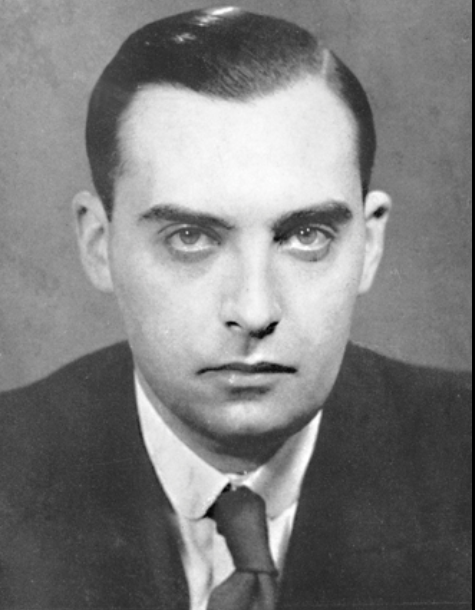
In his essay Preface in Praise of Popular Prejudices, published in 1935, physician and surrealist philosopher Pierre Mabille explored a very similar idea. He delved into theories of the unconscious, convinced that the characteristics of development were the same across the board, whether he was looking at a plant, an idea, society, or the human brain. He even wrote a book, La Construction de l’homme, in which he seriously considered the idea that the unconscious contains the entirety of history, which is only accessible to us through the actions of individuals. In explaining his way of thinking he, like Plato, turns to geography: “There is nothing on the surface of the globe which was not once underground (water, earth, fire). There is nothing in the intelligence which did not once digest and circulate in the depths.” He goes on to argue that there is nothing improbable about human aptitude, any more than a mountain is an improbable formation of Earth. Through his lens, consciousness and skill fluctuates from person to person as naturally as volcanoes rise and canyons dip.
In a contemporary context, these ideas still persist; the theory of non-local

consciousness mimics the ideas philosophers have been reinterpreting for centuries. Only now, scientists as well as philosophers are in on the conversation. As research continues to evolve and offers increased merit to the possibilities created by quantum physics, there seems to be less evidence to dispute the notion that Plato and Mabille may, in fact, have been on to something. But at this point you may be asking, so what? The mystery of consciousness has remained elusive for centuries, and odds are we won’t crack it in any of our lifetimes - so why should we care? Beyond the general intrigue, the question can have practical applications, especially for artists in the age of generative AI. After all, if we accept the Theory of Forms, or non-local consciousness, as fact for a moment, then the way AI modules are built designs them specifically to do what our consciousness already does.

To circle back to Plato, think of the allegory of the cave; people chained in a cave facing the wall, only able to perceive the world in the shadows cast from a light behind them. One day, someone escapes and discovers the entire 3-dimensional world that exists beyond the shadows. He tries to tell the rest of the cave people, but no one will believe him. Their entire worldview has been shaped in shadows. In this case, the shadows are representative of the physical world, and the actual world represents the World of Forms. And in the case of the developing landscape of technology, generative AI is akin to the shadows. It acts as an imitation of a far richer world, capable only of dimly recognizing far more complete forms of ideas, artwork, and creativity; it makes a show of the shadow puppets on the wall, and derives people of the real, 3-dimensional life beyond the cave. As Mabille argued, if we want access to the universe, and to the depths of our intelligence, we must engage with it on an individual level. We cannot delegate it to modules that know only how to imitate the shape of our world.

At SAEN, we aim to help you do that. By teaching the skills artists need to stand on their own two feet, we help them get one step closer to new realms and, hopefully, closer to themselves. If you’re interested in this cause, or think you could benefit from it, visit the donation platforms on our main page or check out the bootcamps we offer! In reality, the question of what consciousness is may be unanswerable, at least to us. But fortunately, SAEN is here to answer the question of what to do with it.


Comments